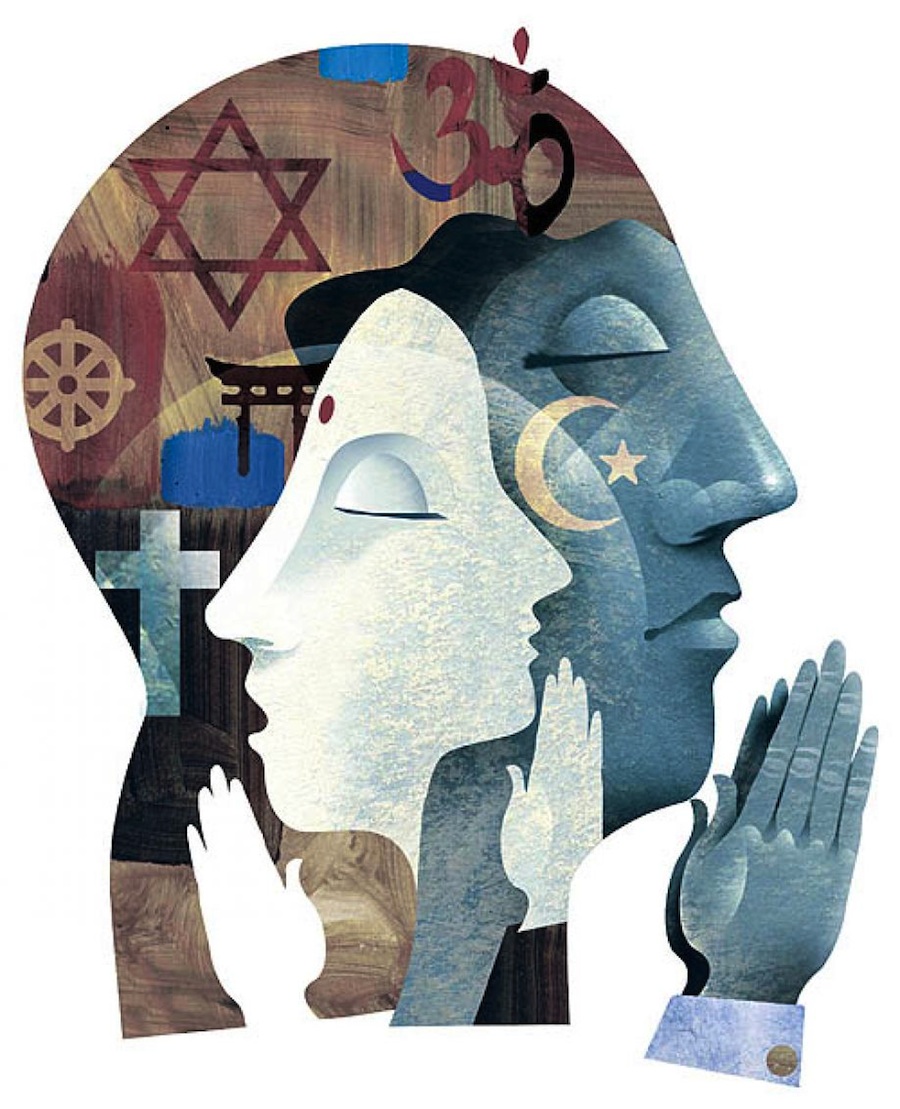
Nowadays,
parents find themselves having a hard time when they try to decide whether they
should instill their beliefs about religion in their children or not. Although
the majority of children complain about being forced to adopt a religious
belief, parents continue claiming their authority of being the only ones who
can select the perfect religion for their children. While I believe parents
should guide their children on the path they think is the best, other people
claim that children become slaves with no rights to choose what they prefer
according to what they have learned through the years. If parents choose to
instill their beliefs of religion to their children, they should consider different aspects that might cause difficulties during the process in order to avoid further conflicts.
 Depending on
the type of education they get at school, children could perceive their
parents’ religious beliefs differently. Children learn from parents how to
behave at home; but once they are outside home, they learn rules about how to
behave outside home¹. This is why teachers have an important role over a
child’s development: a good teacher is capable of influencing a whole classroom
of kids in the right direction, but for the teacher, the right path may differ
from the parents’ perspectives, even if these are about religion.
Depending on
the type of education they get at school, children could perceive their
parents’ religious beliefs differently. Children learn from parents how to
behave at home; but once they are outside home, they learn rules about how to
behave outside home¹. This is why teachers have an important role over a
child’s development: a good teacher is capable of influencing a whole classroom
of kids in the right direction, but for the teacher, the right path may differ
from the parents’ perspectives, even if these are about religion.
If children
feel pressured or obliged to follow religious traditions, they could end up
rejecting them at some point. As an example, we have a famous philosopher named
Friedrich Nietzsche. He grew up in an atmosphere of deep religiosity; in
addition, his mother insisted through the years that he had to become a
Lutheran pastor. Nietzsche got tired of being pressured by his family, and he
ended up rejecting Christianity.
As children
grow up, their own conclusions about religion may differ from the ones their
parents have. In my experience through my second year of high school, I have
learned different aspects about various religions that my parents never taught
me. Those aspects have radically changed the way I used to understand how
religion worked, thing that has created many arguments between me and them.
Summarizing
the different points presented before, it is extremely important for parents to
take into account all the situations and perhaps other situations they might
encounter through the vast path of teaching their beliefs about religion to
their children. In fact, when children get influenced by other people or information acquired at school, their perspective about religion is more likely to change. Once the difficulties are recognized, both parents and children will try to avoid conflicts that could end up hurt them.
- The Influence of Schools on A Child
- A. Belda, J. M. Caragante, Historia de la Filosofía, Toledo, Editorial Casals, S. A.

No comments:
Post a Comment